Most industrial wood buyers already know what they need to get the job done. Sometimes, however, a new need arises, and you’re faced with the choice between hardwood and softwood for your next project.
Choosing between hardwood and softwood comes down to how each wood will perform under the specific demands of the application. Let’s break these factors down.
Six Factors That Affect the Choice Between Hardwood vs. Softwood
You need industrial wood that will do the job, which means you must think about how each of the wood types will perform.
- Load Requirements
- Will the wood you choose support the weight, pressure, and stress you put on it?
- Weight
- Do you need to consider the weight of the wood you choose when planning for transportation and handling?
- Strength and Durability
- With the strength of the wood you choose hold up under repeated impact and heavier loads?
- Customization
- Is the wood easily machinable for custom cutting, shaping, drilling, and fabrication?
- Cost and Availability
- Which of the woods chosen provides the value for the application, and is that wood readily available in the quantities needed?
Characteristics of Hardwood vs. Softwood
Once you know what your applications require, you can begin to consider the characteristics of hardwood and softwood to see which is the best fit.
Hardwood
When choosing industrial wood for applications that require the wood to be of greater density and hardness, with high wear resistance and load-bearing strength, hardwoods fit the bill. They exhibit high density and durability, with strong resistance to impact and repeated use.
Softwood
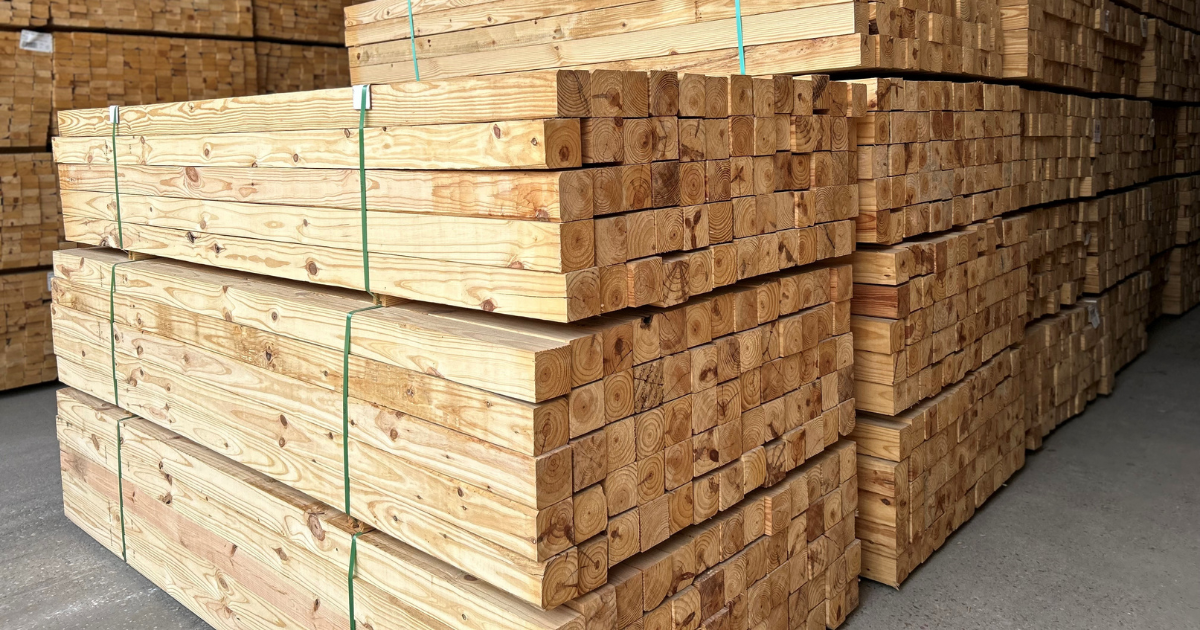
When you need to consider weight, workability, availability, and cost, softwood is usually the answer. In most cases, softwoods are lighter, easier to cut and fabricate, and available in a variety of industrial grades.
Common Applications for Hardwoods and Softwoods
Because of the specific characteristics of hardwoods, many use them for heavy duty dunnage and cribbing, industrial shipping saddle construction, shoring, and lagging.
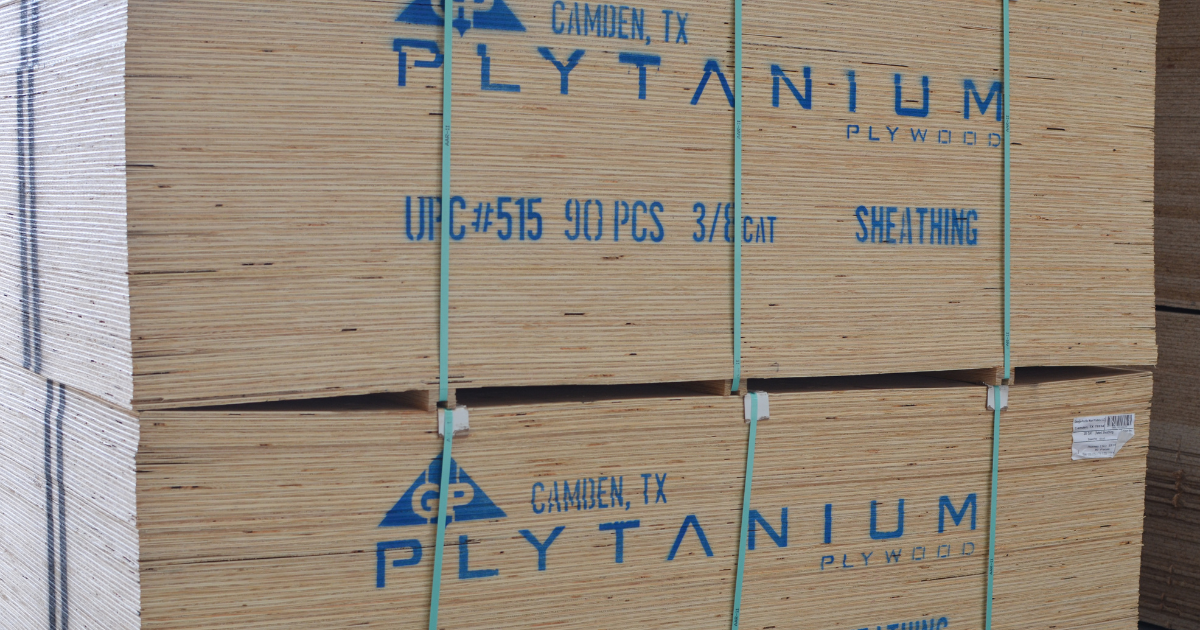
Softwoods are often used for scaffold boards, crating, blocking and bracing, construction mudsills, chocks, and plywood applications.
Keep in mind that these are the most common applications, but both hardwoods and softwoods could be suitable in many scenarios. Understanding the requirements of the project is key to choosing the right industrial wood.
Lodge Lumber’s Hardwood and Softwood Solutions
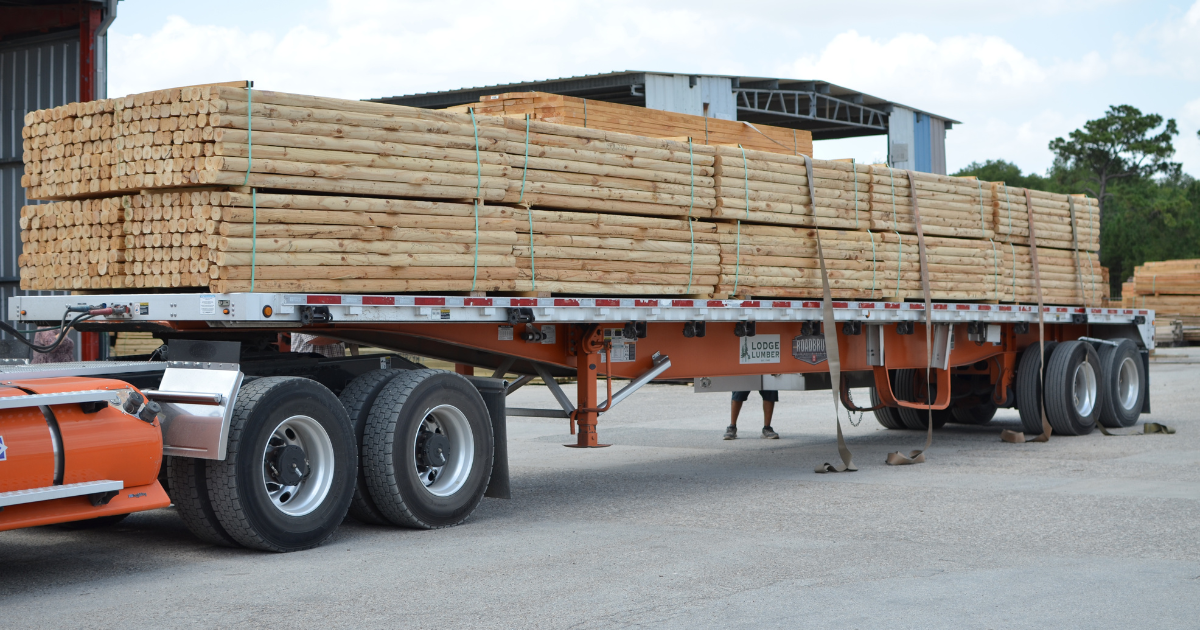
Lodge Lumber carries a wide variety of hardwood and softwood solutions, many of which can either be cut to size according to your specifications or as manufactured products such as shipping saddles, cushion blocks, or outrigger pads. Hardwoods from Lodge Lumber are mixed species, all of which are sourced in the Southeast. Softwoods are primarily Southern Yellow Pine.
To learn more about our hardwood and softwood offerings and how they might be used for your next project, reach out today to start a conversation or get a quote.